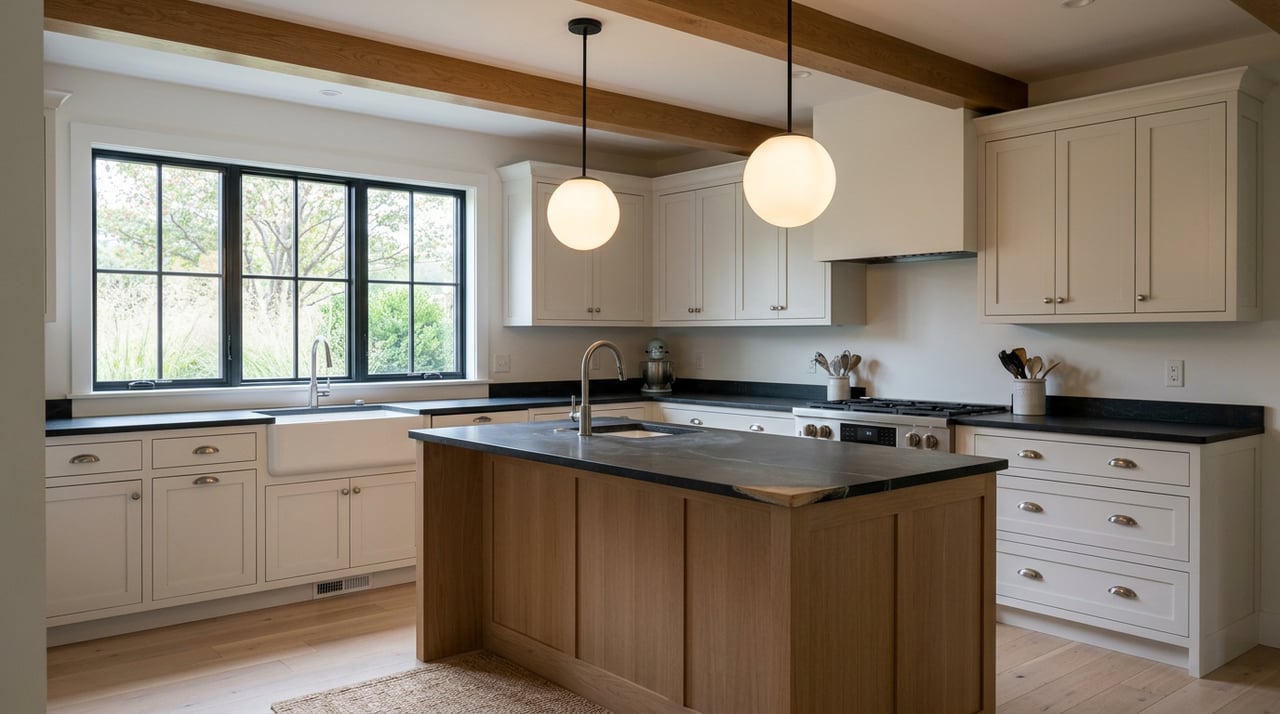
In Union Pier, the Same Street Can Have Two Different Rental Rulebooks
September 24, 2026
September 24, 2026
Picture two cottages on the same stretch of road in Union Pier, close enough that you could walk from one porch to the other in under a minute. Both have lake views. Both show up in the same MLS search. One of them can legally continue operating as a short-term rental under its current owner's permit history. The other cannot, and never will, no matter how strong its past bookings look on paper.
The difference has nothing to do with the house. It has to do with an invisible line running through town that most buyers never think to ask about.
Union Pier is unincorporated. It has no mayor, no city council, and no single zoning code. The northern half falls under Chikaming Township. The southern half falls under New Buffalo Township. Each township writes and enforces its own rental rules, and in the past year those rules have moved in noticeably different directions.
That matters because "Union Pier" functions as one name for two separate regulatory environments. A listing agent can describe a property as being in Union Pier without ever telling you which township holds the deed to its rental rights, and the two townships currently treat those rights very differently.
Chikaming Township spent much of 2025 studying its short-term rental problem after finding that vacation rentals had grown to roughly 13 percent of the township's housing stock, up from the low 300s in 2018 to about 520 homes by the time the study wrapped. In February 2026 the township board adopted Ordinance No. 164, which took effect March 23, 2026, and set a hard cap of 550 short-term rental permits townwide. At the time the ordinance passed, the township was already sitting at an estimated 517 permits when renewals were counted, meaning the cap was never meant to leave much room to grow.
The ordinance includes a provision that matters more to buyers than almost anything else in it: the permit terminates automatically the moment the property changes ownership. It does not pass to a new owner as part of the sale. A buyer who wants to keep renting the property short-term has to apply for a brand-new permit, and that application is subject to whatever room is left under the cap at the time.
As of this year, there is no room left. The cap was reached, and the township is not accepting new applications or maintaining a waiting list. The Chikaming Township rental permits page spells out the mechanism directly: once the 550 cap is hit, no additional applications are accepted, and the number of permits available in the next cycle won't be announced until after the current renewal period closes on February 1, 2027, on a first-come, first-served basis.
Reported fees for a Chikaming permit vary depending on the source. Coverage of the February adoption meeting described a structure of $500 for the first bedroom and $250 for each additional bedroom, while the township's own current rental permits page lists $250 for registration plus $250 per bedroom. Either way, the fee scales with bedroom count, and it's worth confirming the current number directly with the township rather than relying on an older news account.
New Buffalo Township, which covers the southern portion of Union Pier along with the land wrapping around the city of New Buffalo, takes a different approach. Short-term and long-term rentals are both permitted township-wide under Chapter 332 of the township code, which requires a license, an inspection, and a $500 fee for a 36-month term. There is no numeric cap on the total number of permits the township will issue.
The township did tighten one thing in 2025. A March 17 amendment to the rental code limits licensing to one short-term rental unit per parcel. That change matters most for anyone eyeing a property with a guest cottage, a converted garage, or any setup that looks like it could support two separate rental units on one lot. Under the current rule, only one of those units can be licensed as a short-term rental, no matter how the previous owner marketed it.
Long-term rentals, meaning leases of 30 consecutive days or longer, go through the same Chapter 332 license and inspection process in New Buffalo Township, so a buyer weighing short-term versus long-term strategy on the south side is at least working from one consistent set of paperwork.
| Chikaming Township (north Union Pier) | New Buffalo Township (south Union Pier) | |
|---|---|---|
| Governing rule | Ordinance No. 164, effective 3/23/2026 | Chapter 332, one-per-parcel amendment 3/17/2025 |
| Townwide numeric cap | 550 permits, cap currently reached | None |
| Per-parcel limit | Governed by the cap itself | One short-term rental per parcel |
| What happens at sale | Permit terminates automatically; buyer must reapply | Buyer applies under the same standing process, cap-free |
| License term | Tied to ordinance renewal cycle | 36 months |
| Reported fee | $500 first bedroom + $250 per additional bedroom (news coverage) or $250 registration + $250 per bedroom (township's own page) | $500 flat |
Union Pier's median home price came in at $925,000 in August 2026, down 11 percent year over year. That figure blends both sides of the township line into one number, which means it tells you nothing about whether a given address can actually operate as a rental the way its listing history suggests.
This is the part that trips buyers up. A seller on the Chikaming side can show a full season of strong booking income right up until closing, because the permit is still active in their name. That income record does not transfer with the deed. If the township's 550-permit cap is still full when you close, and it has been full since it was reached, you may not be able to get a permit of your own until after the renewal cycle closes in February 2027, and even then, availability is not guaranteed and there is no waiting list to hold your place.
On the New Buffalo Township side, the risk looks different. A property with a main house and a guest cottage might have been marketed as two rentable units before 2025. Since the one-per-parcel amendment, only one of those units can be licensed going forward, which changes the income math even though the township itself isn't capping total permits.
Neither situation is disclosed by a median price. Both are disclosed by asking one question before you get emotionally attached to a listing: which township is this parcel actually in?
Does Chikaming's cap ever reopen? Yes. New permits become available after the current renewal period ends on February 1, 2027, and the township will announce how many are open at that time. Applications are processed first-come, first-served with no waiting list.
Does the cap apply to long-term rentals too? No. In Chikaming Township, leases of 31 days or longer generally follow standard residential zoning rather than the short-term rental cap, so a buyer who's flexible on rental strategy has more room to work with on that side of town.
Is there a way to know for certain which township a specific address falls in before I tour it? Yes, and it's worth confirming before you get attached to a property rather than after. This is exactly the kind of detail worth a phone call before you write an offer.
Union Pier's charm hasn't changed. What has changed is that the town's rental economics now run on two separate rulebooks, and the only way to know which one applies to a specific address is to ask before you're already in contract.
If you're weighing a purchase on either side of that line, or you own a property in Union Pier and want a clearer read on what it's actually worth under today's rules, reach out to Meghan Maddox or request a free home valuation to see where you stand.

I am committed to guiding you every step of the way—whether you're buying a home, selling a property, or securing a mortgage. Whatever your needs, I've got you covered.
ADDRESS
1401 LAKE SHORE DR
MICHIGAN CITY IN 46360